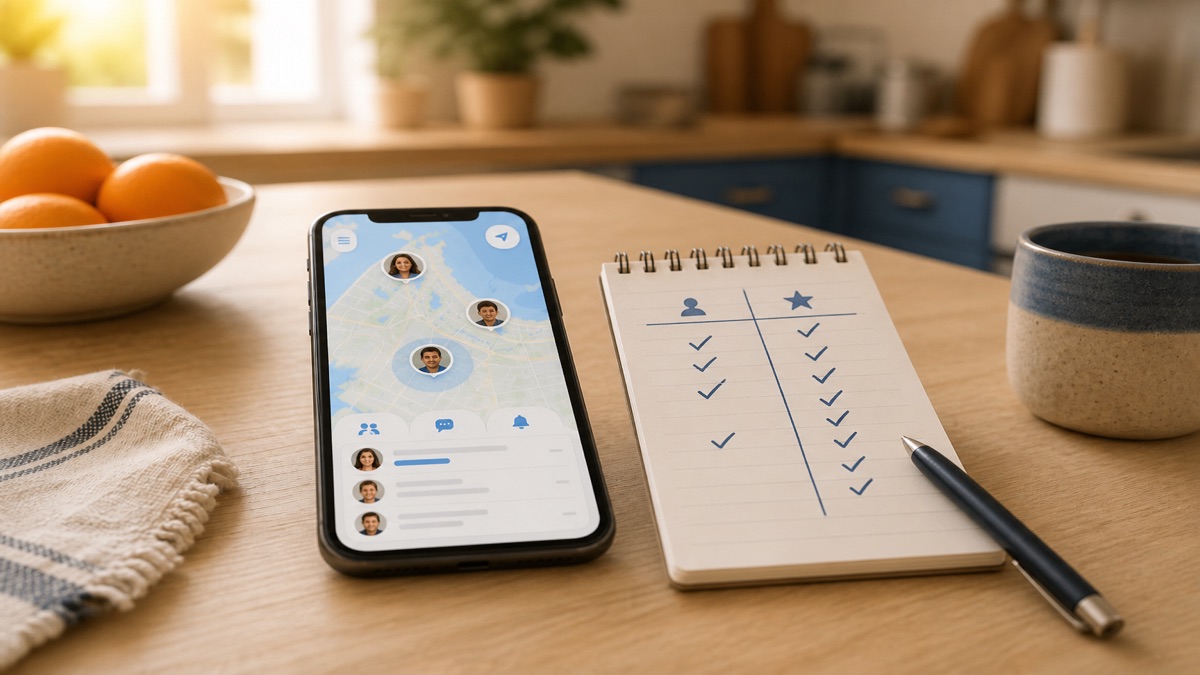
Yes, Life360 is free at the basic level, and the free tier is more usable than most people expect. Life360's current US plan page lists two days of location history, two Place Alerts, a family driving summary, and Tile item tracking. Life360 also documents free crash detection, but emergency dispatch and roadside assistance require eligible paid plans. Paid monthly tiers currently run from $9.99 to $24.99.
Life360's own pages answer "is Life360 free?" with an enthusiastic yes and a gentle push toward membership. Here's the version with the line items, checked September 2026, so you can decide whether the free tier is genuinely enough for your family. For a lot of families, it is.
What free actually includes
The free tier is a real product, not a trial:
- Live location sharing for members in your circle
- 2 days of location history
- 2 Place Alerts
- Family Driving Summary
- Tile item tracking on the family map
- Crash detection: if a crash over 25 mph is detected, Life360 checks on you and contacts you and any emergency contacts you added; detection has device, permission, battery, signal, and impact thresholds
If your family's whole job list is "see where everyone is, know when they get home and to school," the free tier may be enough. Two Place Alerts is the constraint that eventually pinches.
What paid actually adds (prices checked September 2026)
| Tier | Price | What it adds |
|---|---|---|
| Silver | $9.99/mo | 7 days of history, 5 places, crash detection |
| Gold | $16.99/mo | 30 days of history, unlimited places, crash detection with emergency dispatch, 24/7 roadside assistance, individual driver reports |
| Platinum | $24.99/mo | 50 miles of free towing, $1M stolen funds reimbursement, disaster response, travel support |
Life360 says paid membership benefits cover family members in your Circle. Its current US page advertises annual billing at a 27% savings, but checkout terms can change. Verify current numbers on Life360's plans page before buying.
The pattern: paid tiers mostly buy history, unlimited places, and emergency services. The core map experience is the same on free.
The dispatch distinction, because it matters
This is the fine print worth reading twice. Free crash detection notifies people who love you. It does not send an ambulance. Per Life360's own support docs, emergency dispatch on a detected crash requires Gold in the US, as does 24/7 roadside assistance.
If the reason you're considering Life360 is a new teen driver, this distinction is central. Free Crash Detection can contact you and your emergency contacts; eligible Gold and Platinum members can receive emergency dispatch, subject to Life360's detection, location, device, network, and regional requirements.
Who should pay, honestly
- New teen driver in the family: Gold, $16.99/month. Crash dispatch plus roadside assistance is the package you actually want, and no free app replicates it.
- You keep hitting the 2-place limit: Silver gets you 5 places and 7 days of history for $9.99. Unlimited places requires Gold.
- You want theft and travel coverage: Platinum, though at $24.99/month ($300/year), price it against your existing insurance and credit card benefits first.
Who should stay free
If nobody in your circle drives yet, or your usage is "did the kids get home," free Life360 is a legitimate setup to evaluate. Its two Place Alerts can cover home and school, and its support center documents the requirements and limits of free Crash Detection.
And if what you're really paying for is arrival alerts and ETAs, check whether you need Life360's bundle at all. Lighthouse (ours, made by MapQuest, so judge accordingly) does live ETAs, one-tap "On My Way," automatic arrival alerts for the circle. Choose the annual plan to get six months free; after the trial it renews at $79.99/year unless canceled. A $9.99 monthly plan is also available. Offer eligibility and terms are shown in the App Store. No driving scores. The trade: no crash detection or roadside assistance. Our full alternatives rundown covers when that trade makes sense.
The one-sentence version
Free Life360 covers core location features with two Place Alerts. Paid plans add longer history, more places, and—in eligible higher tiers and regions—emergency services and roadside assistance.